Used Washer-Dryer Combo vs Separate Machines: Which Should You Buy?
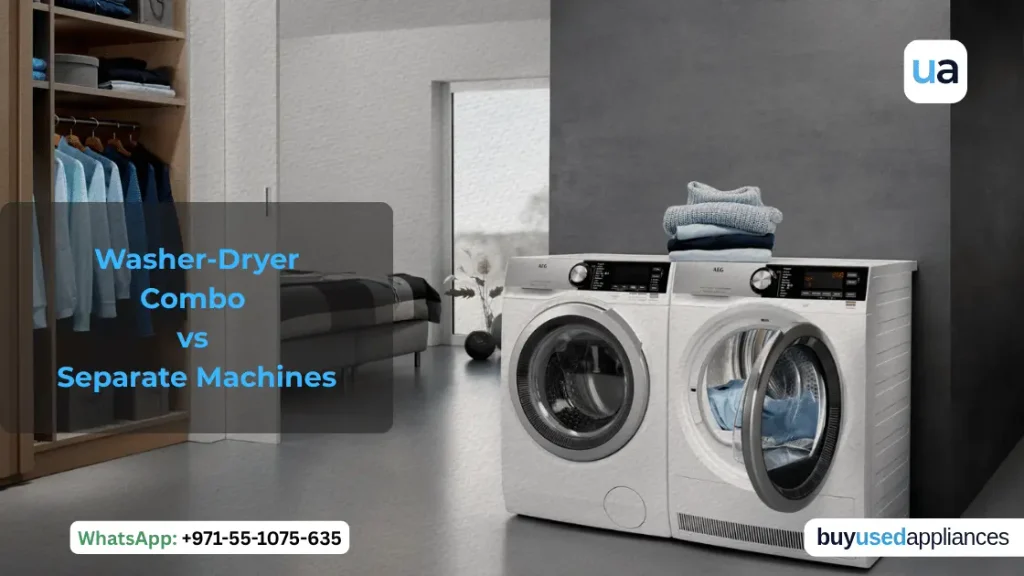
One machine can sound like the obvious choice when your laundry corner is small. But what happens when the next load is ready while the first is still drying?
A used washer-dryer combo saves the space occupied by a second appliance. Separate machines can handle different loads at the same time. The better choice depends on your layout, drying habits and the exact units available.
Before comparing brands, decide how you want laundry day to work.
Understand what the listing is offering
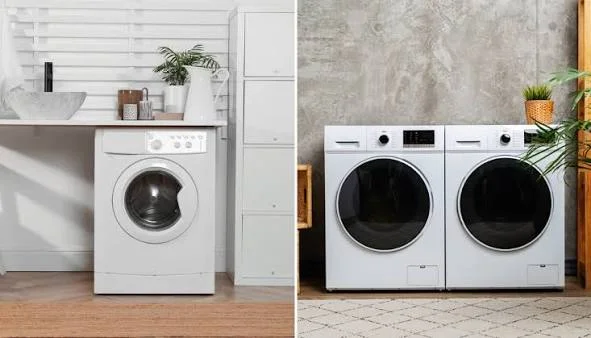
A washer-dryer combo washes and dries in one drum. A separate set includes a washing machine and a dedicated dryer.
Some listings use “washer dryer” loosely. Check the photographs and model numbers so you know whether the offer contains one appliance or two.
Our washer and dryer category includes different configurations. Confirm the specific unit, included accessories and availability when enquiring.
Compare the two setups
| Decision | One-drum combo | Separate washer and dryer |
|---|---|---|
| Space | One appliance footprint, with required clearances | Two positions, or an approved stacked arrangement |
| Laundry flow | One load occupies the machine through washing and drying | One load can wash while another dries |
| Moving clothes | A suitable combined programme may avoid transferring a load | Clothes must move from washer to dryer |
| Capacity | Check washing and drying limits separately | Check each machine’s rating and programme limits |
| Used-unit checks | Test both washing and drying functions | Assess both appliances individually |
| Repair disruption | One fault may affect access to both functions | A fault in one unit may leave the other usable |
Neither arrangement is automatically the more reliable purchase. Condition, service history and model-specific support still matter.
Read both capacity figures
The largest number in a combo listing may describe washing capacity only. Drying capacity can be lower.
For example, Samsung lists model WD80TA046BX/GM with 8kg washing and 6kg drying capacity. This illustrates the distinction; it is not a stock recommendation.
If you fill a machine to a washing limit above its drying limit, you cannot assume the whole load can continue straight into drying. You may need to remove some items or start with a smaller load. Follow the selected programme’s instructions.
Capacity ratings refer to dry laundry under specified conditions. They do not mean you should weigh a wet load against the headline number or pack every programme to the same limit.
The same comparison matters with separate units. A large washer paired with a smaller dryer may still require you to divide a load.
Think about the order of your laundry
Imagine a household with one clothing load and one towel load. With a combo, the first load occupies the drum until its selected process finishes. The next wash must wait.
With separate machines, the clothing can dry while towels wash, provided the installation supports normal use of both. That flexibility may matter when several loads build up over the weekend.
For someone washing smaller loads throughout the week, the benefit may be less important. A combo may suit a routine where drying is occasional and space is limited.
Ask for programme durations for the model and load you expect to use. Avoid comparing a short wash-only programme with a full wash-and-dry cycle.
Check the space properly
Measure width, height and depth, including connections and required clearances. Check door opening and access for routine cleaning.
Two separate machines do not always require twice the floor width. Some compatible models support stacking with an approved kit. However, that arrangement needs confirmation for both appliances.
Bosch’s stacking-kit information illustrates why compatibility must be checked before purchase. Use the locally appropriate kit and installation instructions for your exact models, not this example by default.
Do not stack machines simply because their tops look the same size. Have the arrangement assessed and installed correctly, including access to controls and filters.
For a small home, our studio-apartment guide can help you plan the surrounding space too.
Test washing and drying separately
A used combo may wash correctly while having an unresolved drying issue. Ask the seller what testing covered each function.
Request the model label, condition photographs and any known repair history. Ask whether an appropriate drying programme completed with a suitable damp load, rather than relying on a brief power-on video.
For a separate set, apply the same approach to each appliance. A clean washer does not establish the condition of the dryer beside it.
Useful questions include:
- What are the washing and drying capacities?
- Which functions and programmes were tested?
- Are there any errors or incomplete cycles?
- What maintenance or repairs have been completed?
- Are hoses, mounting parts or stacking accessories included?
- What warranty or support applies to each appliance?
Our used washing-machine buying guide covers the broader inspection questions.
Compare the complete cost
Ask for the delivered price of each option, including the services you need. Check installation, required parts and removal of existing equipment separately.
Do not assume that one appliance always costs less to run than two. Compare the actual washing and drying programmes on a consistent basis. Drying technology and how often you use it also affect the result.
If energy information is available, check what the figures include. Wash-only consumption and a complete wash-and-dry cycle are different measurements.
Keep repair support in the discussion too. Ask where help comes from and what happens if one function fails. A vague promise is less useful than clear terms for the unit you choose.
Which setup fits your routine?
Consider a combo when you have space for one machine, run manageable loads and value a single-drum routine. Check that its drying capacity and cycle duration suit you.
Consider separate units when you regularly process several loads and have suitable space. Check both appliances, the installation arrangement and the complete cost.
If you already own a working washer, you may only need a dryer. Compare that option before replacing a machine that still meets your needs. Another important thing to consider is size the of the washer we have written full guide on choose capacity using your actual laundry loads.
Common questions
Does “washer and dryer set” mean one machine?
Usually it means two, but confirm the listing. Ask for the number of appliances and a model number for each.
Can every combo dry its full washing load?
No. Check the separate drying rating and programme limits for the exact model.
Are separate machines always better?
No. They offer flexibility for multiple loads, but require a suitable layout. A properly working combo may be a better fit for a smaller household.
Compare suitable options
Browse the available laundry appliances. If you want two machines, the Siemens iQ700 washer and dryer set listing is one option to enquire about, subject to availability.
Send your space measurements and tell the team how often you expect to dry laundry. Ask for current options, testing details and a full quote before deciding.
2 thoughts on “Used Washer-Dryer Combo vs Separate Machines: Which Should You Buy?”
Comments are closed.